The founders
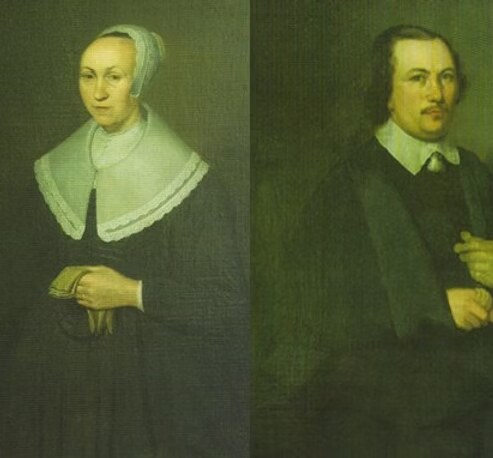
Jean Pesyn and Maria de Lannoy came from the area around Lille (Rijssel), in what is now northern France. As Protestants they found, like many other Walloons, a safe refuge in Leiden, where the textile industry offered work.
They married in Leiden in 1636. Jean probably started out as a bouratwerker, a weaver, and later became a greinreder: an entrepreneur who organised the production and sale of cloth and had others do the weaving. Their only child, Marie, died in 1655 at the age of eighteen, probably of the plague. Jean and Maria then laid down that their estate should become a hofje for older, married members of the Walloon Church. After Maria’s death the executors had it built; by 1683 the gateway was finished.
All the dates at a glance are in the timeline at the bottom of this page.
Building the hofje
The land Maria bought in 1678 was known as the Groenepoort (Green Gateway) or English Gate (see the Pilgrim Fathers). The executors of the will — all of them cloth workers, like Jean — commissioned the hofje from an architect who was then almost unknown, Van Loopwijk. Who lived there is told in residents of the past.
Traces in the city
Jean and Maria probably lived on the Oude Singel, on the site of today’s number 60; the present building is of a later date. Of the Vrouwekerk, where they are buried, a ruin survives on the Vrouwenkerkhof. Both places, and the Pieter Loridanshof, are stops on the walking tour.
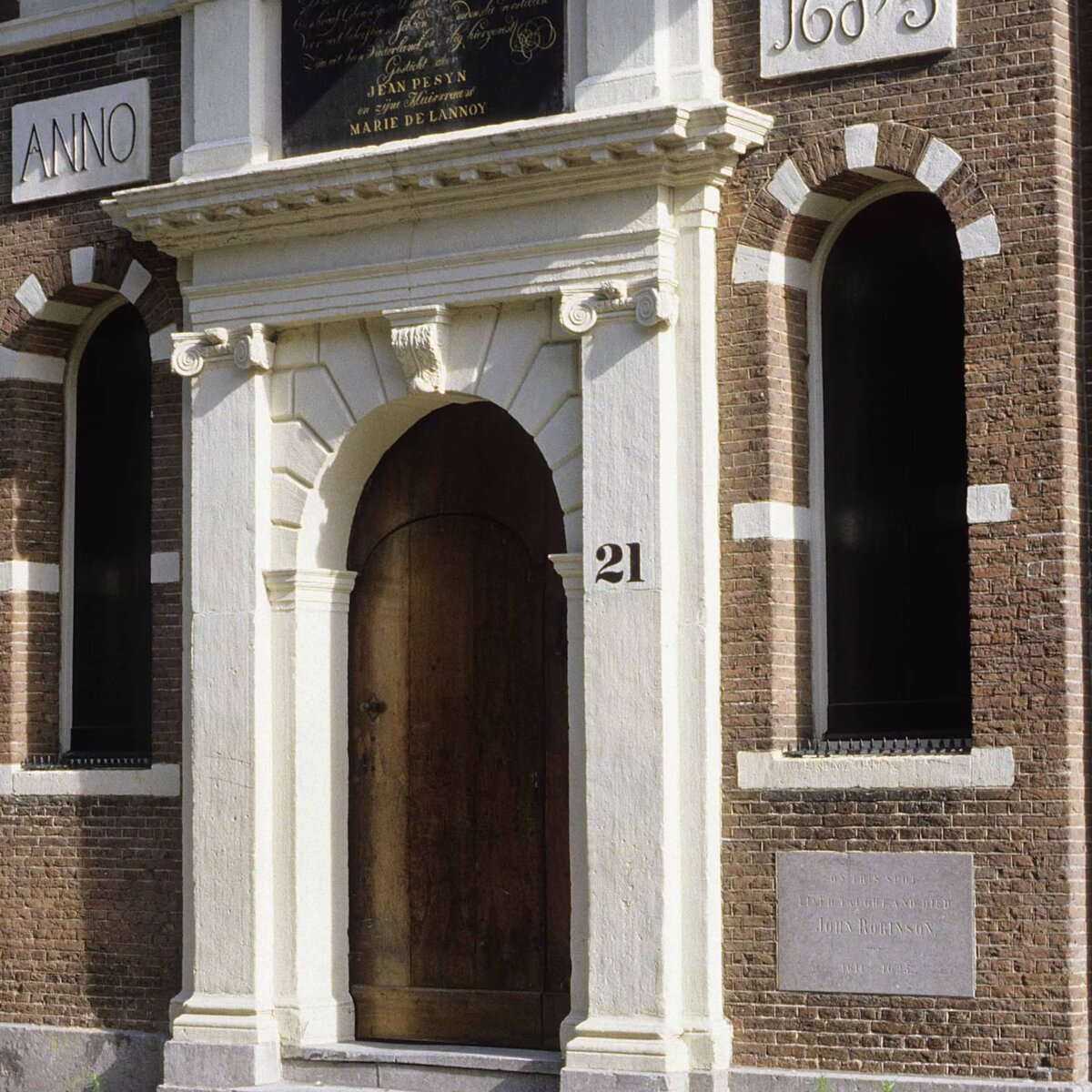
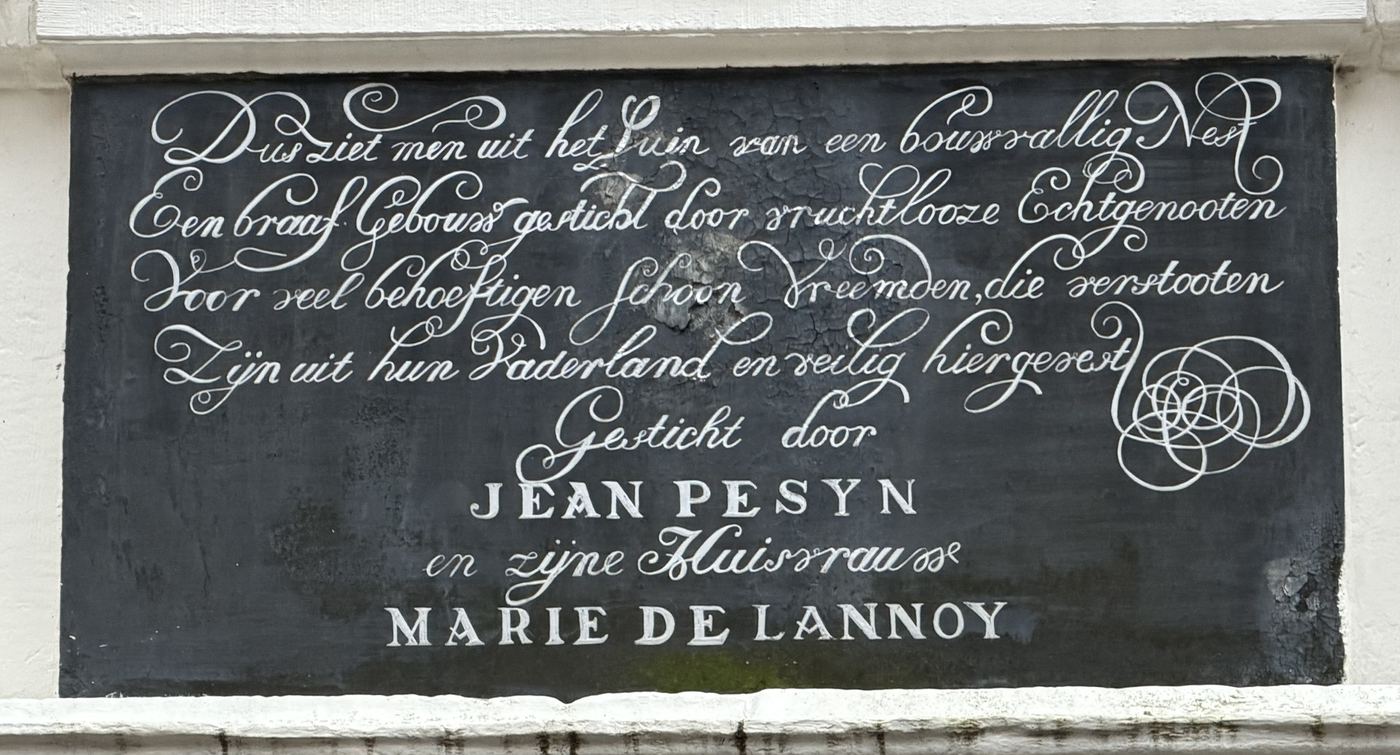
Inscription above the gateway (free translation)Thus from the rubble of a tumbledown hovel one sees
A fine building founded by a childless couple
For many in need, though strangers, who were driven
From their fatherland and safely settled here.
The portraits of the founders hang in the regents’ room: Jean, Maria and their daughter Marie from 1649, and Jean and Maria in later life. You can see them under the regents’ room.
Timeline
- Origins and marriage
- c. 1615Jean born in the area around Lille.
- 1618Maria’s brother Arnoult de Lannoy is already connected with the Walloon Church in Leiden.
- c. 1619Maria born in Bondues, near Lille. Her 1649 portrait gives her age as thirty.
- c. 1618–1635 (estimated)Fled to Leiden as Protestants; members of the Walloon Church.
- 29 Jan. 1636Banns registered in Leiden; the witnesses are Maria’s brother Maximiliaan de la No and her niece Marij van der Straat.
- 17 Feb. 1636Marriage in Leiden. Jean is then probably a bouratwerker, a weaver.
- Family and prosperity
- 6 Sep. 1637Daughter Marie baptised in the Walloon Church.
- c. 1640–1654 (estimated)Jean goes from weaver to entrepreneur: greinreder.
- 1649Jean, Maria and twelve-year-old Marie have their portraits painted.
- 1654Jean becomes a citizen (poorter) of Leiden.
- c. 1650–1666 (estimated)Jean and Maria probably live on the Oude Singel, on the site of today’s no. 60.
- Loss and will
- 1655Marie dies, aged eighteen, probably of the plague, which killed more than ten thousand people in Leiden that year.
- c. 1655 (estimated)Will: a hofje of twelve small houses for older, married members of the Walloon Church; twelve for the twelve apostles.
- 1663Jean becomes a regent (governor) of the Pieter Loridanshof and remains one until his death.
- Legacy
- 1666Jean dies; buried in the Vrouwekerk (Church of Our Lady) next to his daughter.
- 1678Maria buys land on the Kloksteeg, next to the Pieterskerk.
- 1681Maria dies; buried in the Vrouwekerk.
- 1681–1683 (estimated)The executors commission the architect Van Loopwijk.
- 1683The gateway is finished: ANNO 1683 on the façade.
- 1683–1686The hofje is built; it is completed in 1686.
known from sources estimated, not yet confirmed by a source