The regents’ room
The regents’ room was built for the meetings of the regents, the governors who ran the hofje (see residents of the past). In the nineteenth and twentieth centuries the room was put to many uses: from 1824 as the reading room of the Leiden branch of the Society for Public Welfare (Maatschappij tot Nut van het Algemeen), from 1853 to 1882 as the storage library of the Walloon Church, and in the 1940s and 1960s as office space.
In 1966 Van Kinschot — a lawyer, former mayor of Leiden and regent of the hofje — used the room as his living room and study. Today the regents’ room can be visited during the Heritage Days (Open Monumentendagen).
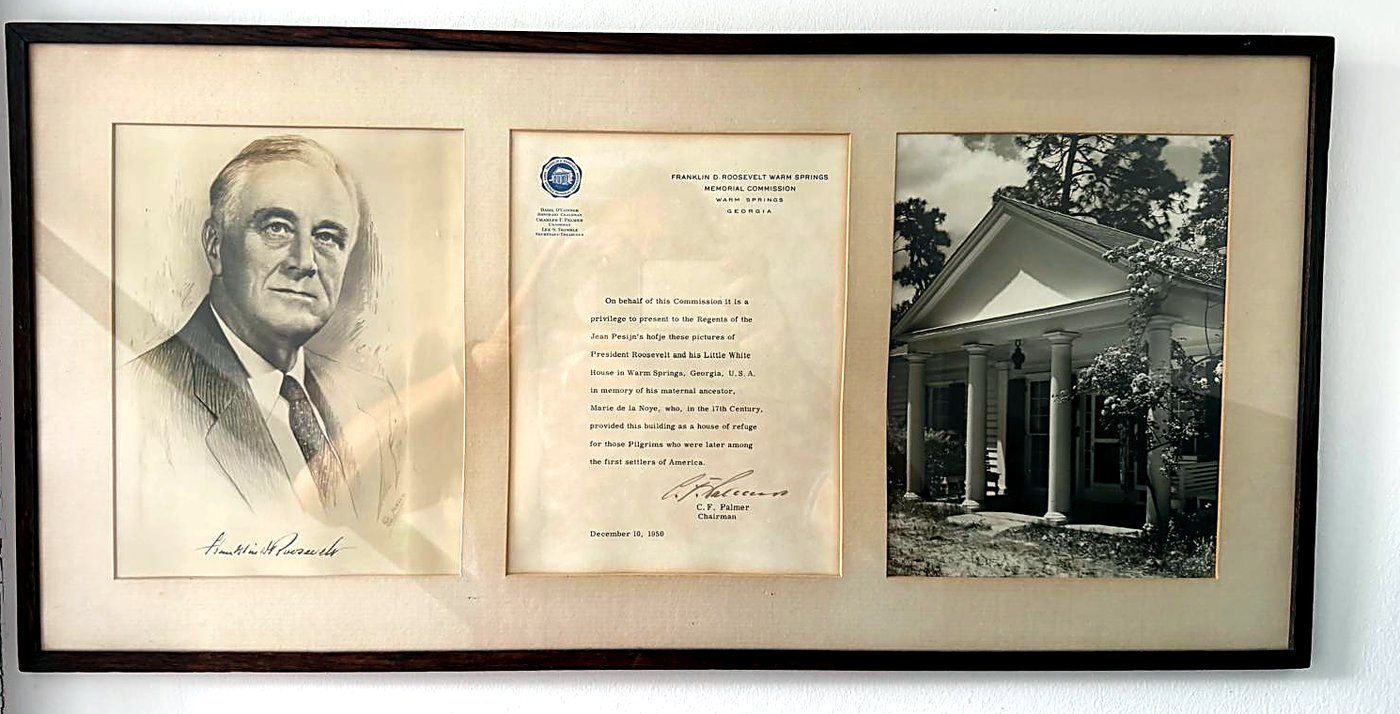
The certificate names as Roosevelt’s “maternal ancestor” one Marie de la Noye, who in the seventeenth century is said to have offered this property as a refuge to the later Pilgrims. Roosevelt’s middle name, Delano, is indeed a corruption of de la Noye — the name of the Pilgrim Philippe de Lannoy. It is the same mix-up between Philippe and Marie de Lannoy that is put right on The Pilgrim Fathers: Marie was the co-founder of this hofje, not his mother.
Portraits
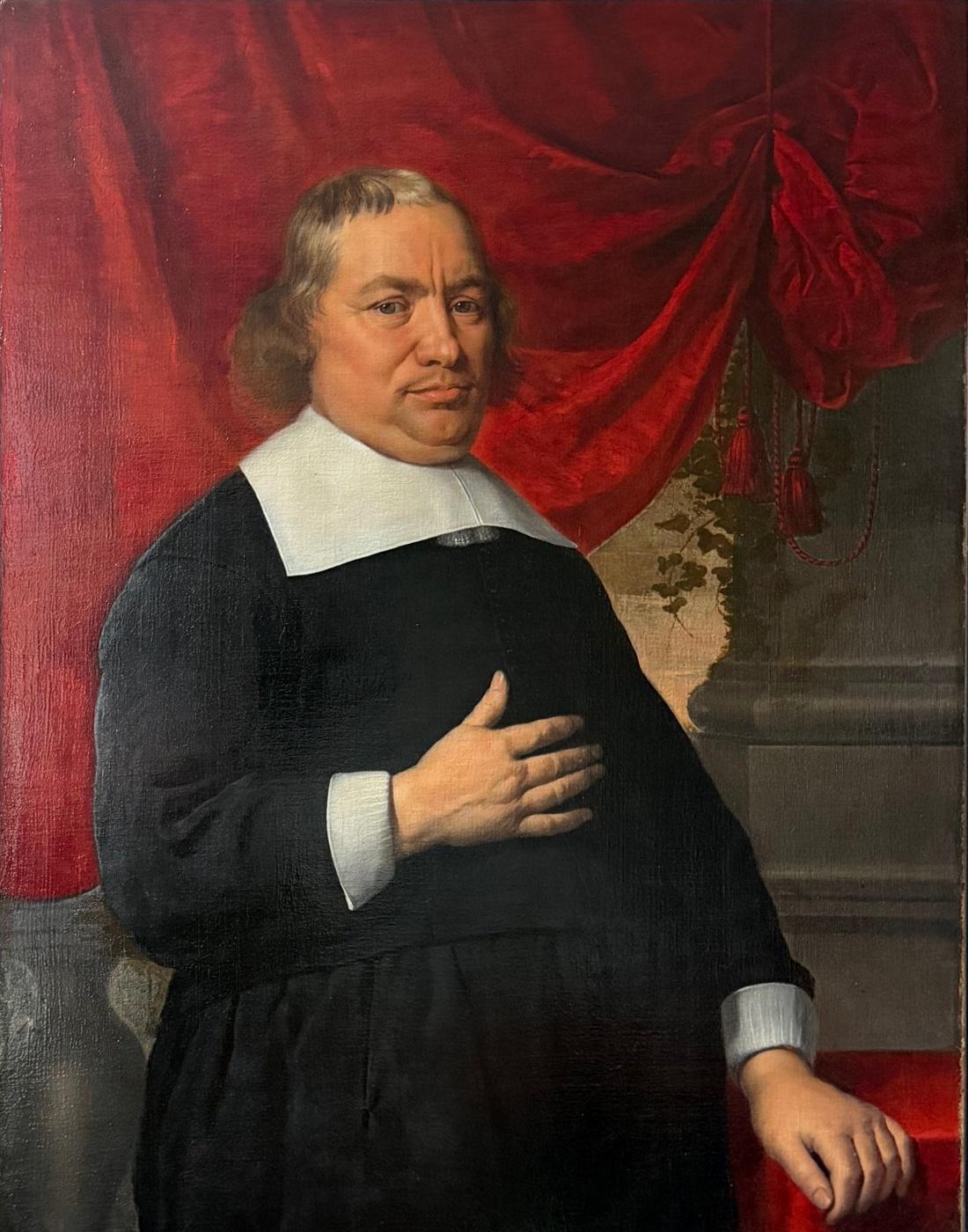
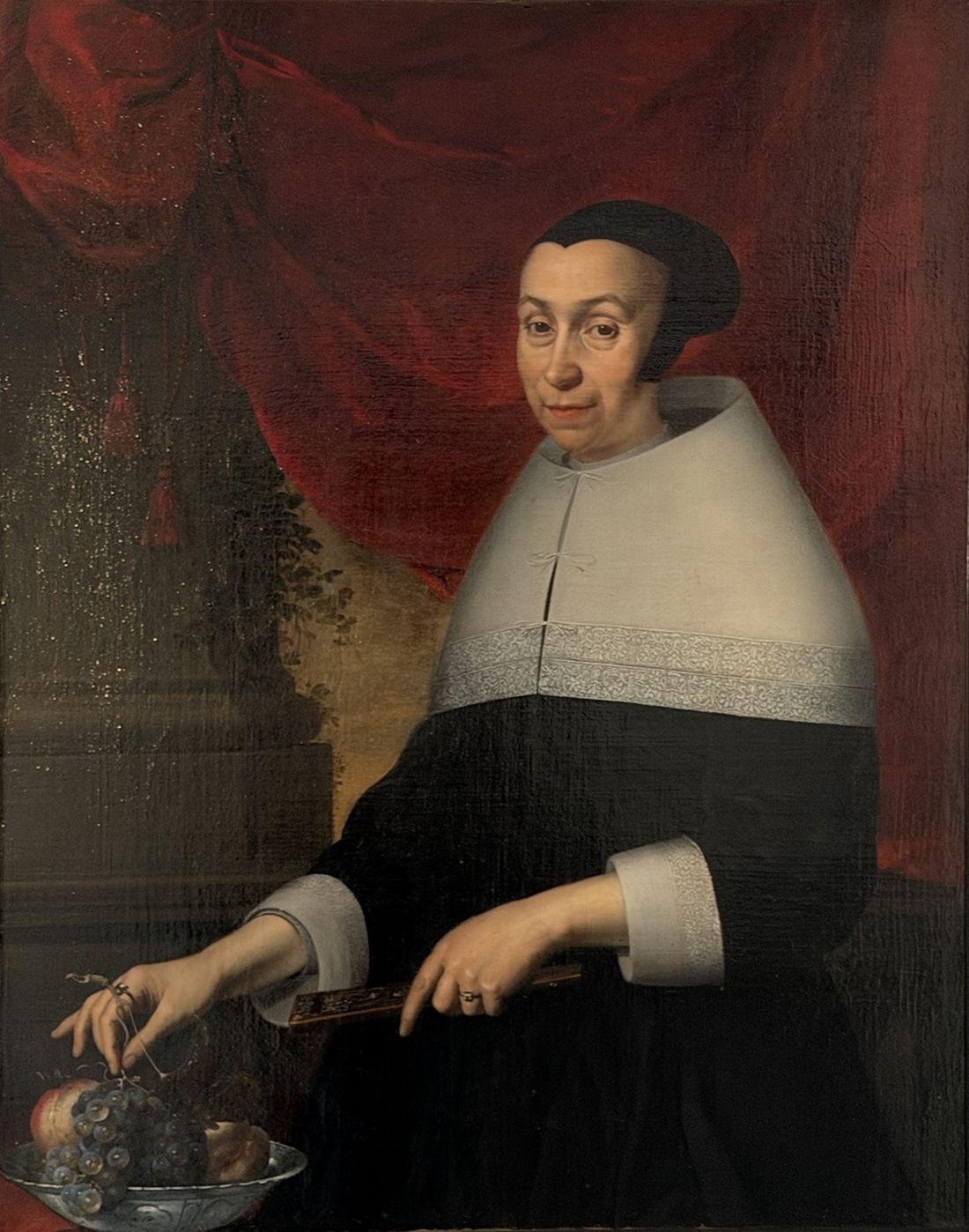
The portraits of the founders hang in the regents’ room. In 1649 Jean, Maria and their daughter Marie had their portraits painted; later came a pair of portraits of Jean and Maria in old age. More about the family under the founders.
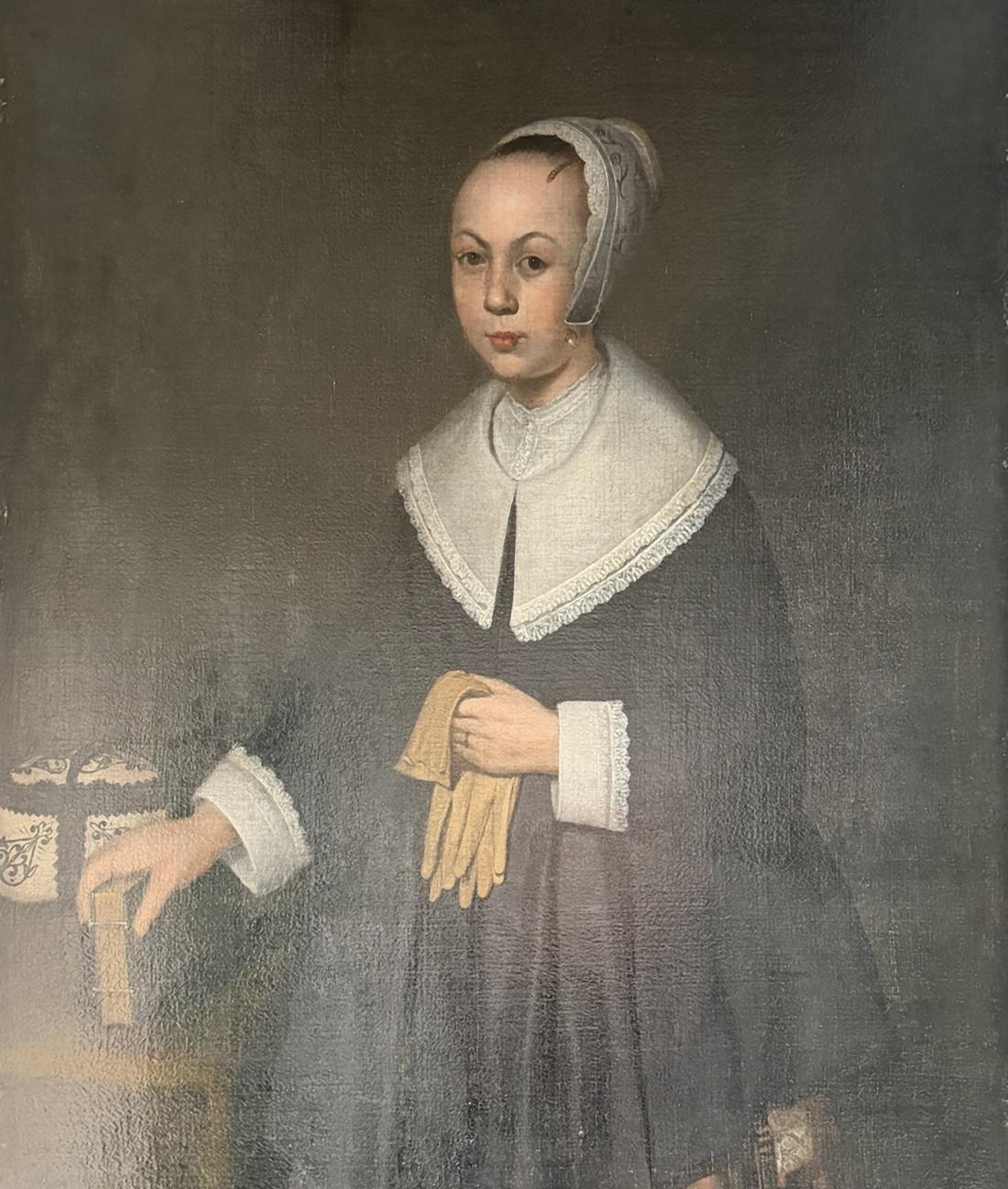
An unknown woman (1832)
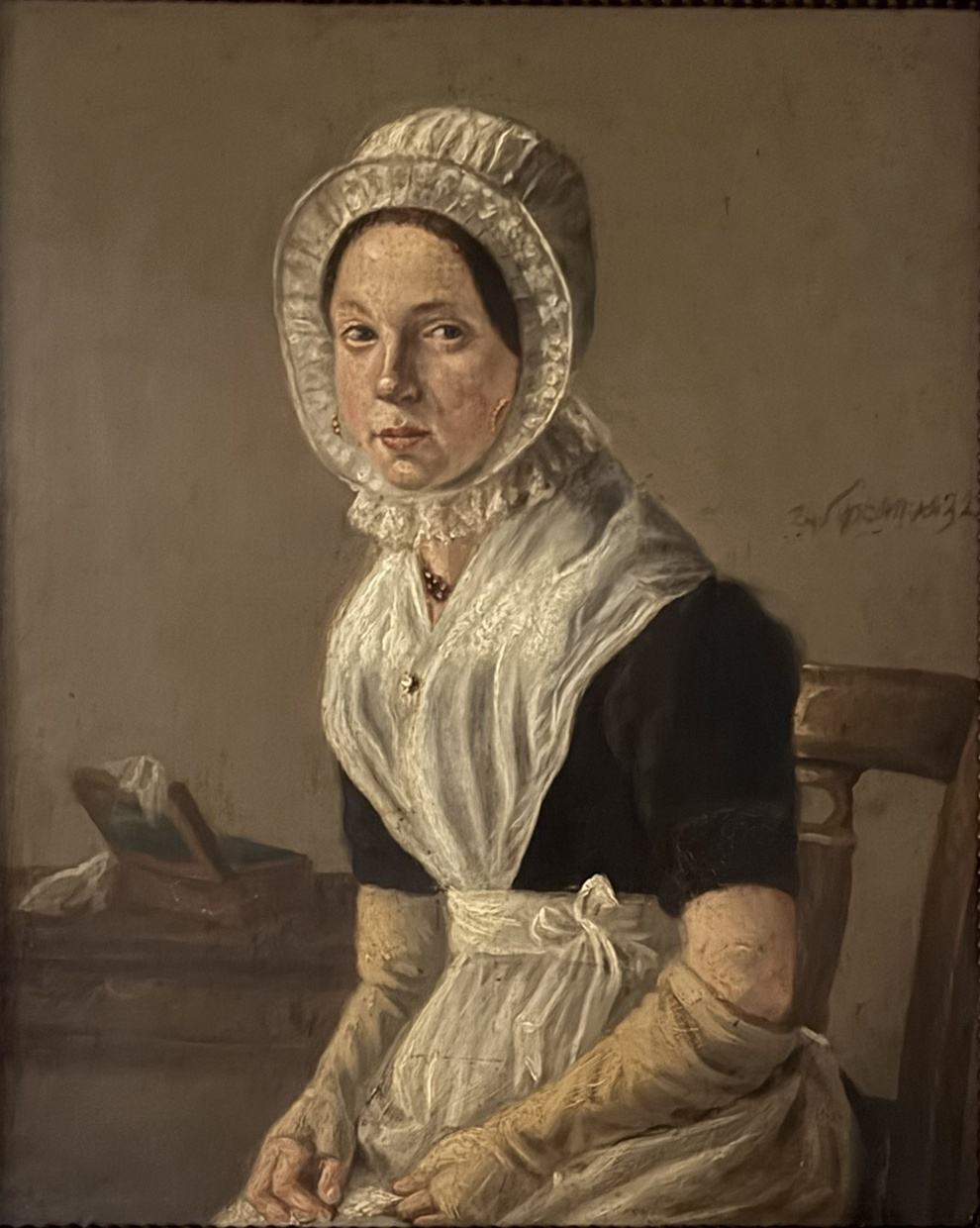
The writing to the right of her is not a signature but a date: 24 February 1832. The style fits it exactly: a modest, domestic portrait in the Biedermeier style, with cap, neckerchief, apron, fingerless gloves and a sewing box as a sign of diligence. Who she was is not known. There are a few theories:
- a resident of the hofje, as the 1948 Leiden yearbook calls her;
- the housemother, who in those days ran daily life in the hofje;
- a relative of one of the regents.
She is probably not a later copy of the portrait of Marie Pesyn: her dress, pose and face belong to the 1830s.